Are Kyoto Food Tours Worth It? An Honest Look
Are Kyoto food tours worth it? Yes, if you want a translator, a curator and a table at places you would never find or book on your own; no, if you already speak enough Japanese to order confidently and would rather wander at your own pace. Guided food tours in Kyoto run from $22 for a hands-on workshop to $70 for a full evening of eating, and the honest answer to whether they earn that money depends less on the price than on what kind of traveler you are. Below is the real value math, the day-versus-night decision, who should walk away, and the season that makes or breaks a three-hour walk through this city.
Quick answer
A Kyoto food tour is worth it if you want a guide who translates menus, gets you into small counters you would not find alone, and turns three hours into a full meal, which is exactly what the Gion & Pontocho night route does at $70 with up to 13 dishes. It is not worth it if you already know Kyoto's food scene, are comfortable ordering in Japanese, or would rather graze Nishiki Market on your own schedule for a fraction of the price.
Key takeaways
- Guided market walks run $41 to $66; evening routes that replace dinner outright run $70
- A self-guided Nishiki graze of six or seven bites typically costs 2,000 to 4,000 yen, well under a guided tour
- The best-reviewed evening route holds 4.9 stars across 477 reviews, the strongest social proof on the site
- August is the hardest month to walk for three hours; mornings and evenings are the workaround
- For the format that fits your budget best, see Kyoto food tour cost
- Free cancellation up to 24 hours before the start time on every listing makes booking ahead low-risk
Every Kyoto food tour compared here
Three formats worth weighing against each other: the best-reviewed evening route, the original Gion evening walk, and a Nishiki Market and Gion combination for a shorter, daytime option.
 from $70
Best Seller — 477 Reviews, 4.9★
from $70
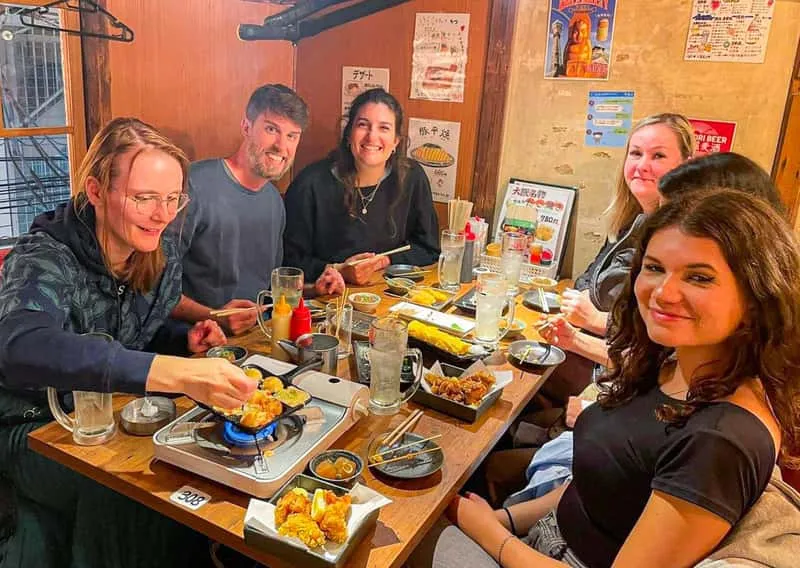
Best Seller — 477 Reviews, 4.9★ Gion & Pontocho Night Food Tour with 13 Dishes
A small-group evening tour through Gion and Pontocho with up to 13 dishes — karaage, tempura, sashimi — paired with Kyoto sake. Start at the illuminated Yasaka Shrine…
- Up to 13 dishes from izakaya plates to sashimi, with Kyoto sake
- Yasaka Shrine illuminated at night to open the evening
- Gion Shirakawa stroll past tea houses geishas still visit
- Finish in Pontocho Alley at a hidden local dining spot
 from $70
Gion Classic 4.8★
from $70
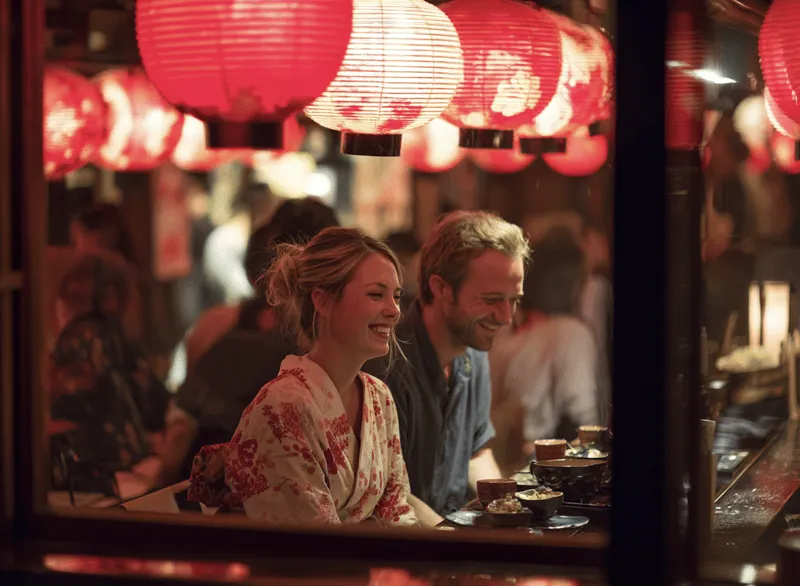
Gion Classic 4.8★ Gion Evening Food Tour — 13 Dishes at 4 Local Eateries
An immersive evening walk through Gion, Kyoto's most famous geisha district. Follow cobblestone lanes lined with wooden machiya houses and work through 13 dishes across 4 local eateries…
- 13 tastings across 4 eateries locals actually use
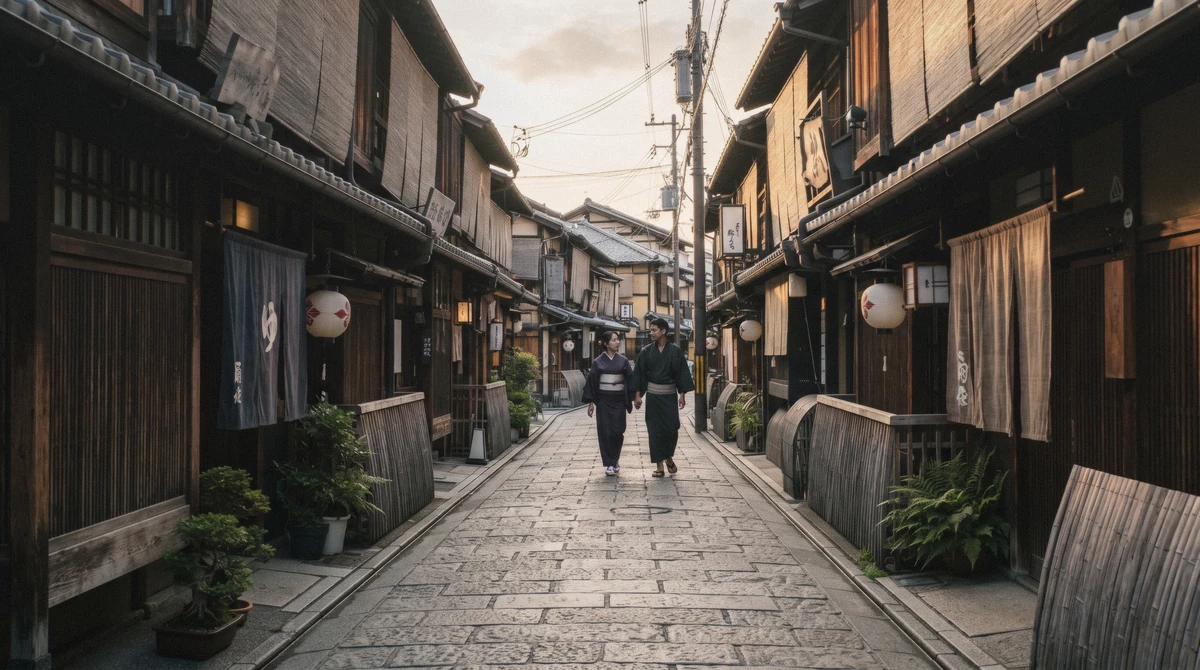
- Evening stroll through Gion's lantern-lit machiya lanes
- Geisha culture and history told street by street
- Mix of long-standing institutions and modern favorites off the tourist path
 from $50
Top Rated 4.8★
from $50
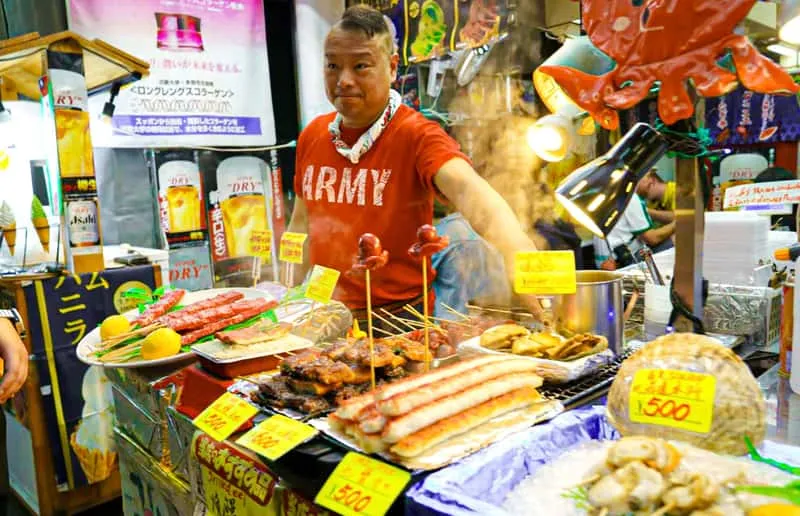
Top Rated 4.8★ Nishiki Market Food Tour & Gion Walk — 7 Tastings
A three-hour walking tour that pairs Gion's stone-paved streets with Nishiki Market, the centuries-old "Kitchen of Kyoto". Stop at Nishiki Tenmangu Shrine, then graze through 7 tastings among…
- 7 tastings of local delicacies inside Nishiki Market
- Walk Gion's machiya streets before diving into the market
- Nishiki Tenmangu Shrine and the market's Edo-period history
- Yuba, Kyoto vegetables and matcha — the ingredients behind Kyoto cuisine
The short answer on value
Strip away the marketing and a food tour is really two things bundled together: a translator and a reservation system. In a city where the best counters are unmarked, seat six people, and take same-day Japanese-only bookings, that bundle has real value. Where it has none is if you already have that access, in which case you are paying for company you did not need.
- Worth it if you have one evening free and want it to be dinner, not a snack before dinner
- Worth it if you cannot read a Japanese menu and do not want to gamble on a photo of the storefront
- Worth it if the shops you would pick on your own are the ones every guidebook already sends you to
Set against that:
- Skip it if you already know Kyoto's food scene from a past trip or from living nearby
- Skip it if a fixed three-hour schedule with a group clashes with the rest of your day
- Skip it if your budget for this trip has no room past a self-guided market lunch
What the guide actually buys you in Kyoto
What a booked evening actually looks like
A guide meets the group, usually at a landmark like Yasaka Shrine or a Starbucks on Sanjo Ohashi bridge, and from there the route is mostly about access rather than walking distance. The group moves between three or four small kitchens, orders arrive already explained, and by the third stop most travelers have stopped checking a translation app and started just eating.
- A seat at counters that are unmarked from the street and would take real local knowledge to find alone
- A running explanation of what is on the plate, in English, so a plate of unfamiliar skewers stops being a guessing game
- A guide who has already built a relationship with the kitchen, which is often the difference between being served quickly and being politely ignored on a busy night
What is included is straightforward: the food and drink tasted at each stop, the guide, and on the evening routes, sake. What is not included is anything eaten outside the stops, transport to the meeting point, and any purchases made independently along the way.
A short checklist before you commit to a booking, since the value case only holds if the logistics fit your evening.
- Confirm the meeting point and arrive a few minutes early; guides on a fixed schedule cannot wait long for a late arrival
- Eat lightly beforehand, not a full meal; the evening routes are built to replace dinner outright
- Bring cash for anything you want to buy outside the tasting stops, since not every small kitchen takes cards
- Flag any dietary restriction at booking rather than on arrival, even knowing it may not be accommodated
- Wear comfortable shoes; a three-hour route covers more walking between stops than it looks on paper
Eating on your own: what it costs and what it costs you
The arithmetic is not close, and it is worth saying plainly: eating alone in Nishiki Market is cheaper than any guided tour on this site. Individual tastings there generally run a few hundred yen to around 800 yen a piece, so a self-guided graze of six or seven bites typically lands in the 2,000 to 4,000 yen band per person, roughly $13 to $25 at the rate of 159 yen to the dollar checked 16 August 2026.
| Approach | Typical cost | What you get |
|---|---|---|
| Self-guided Nishiki graze | 2,000-4,000 yen (~$13-25) | Whatever you can identify and are willing to try |
| Guided market walk | $41-66 (~¥6,500-10,500) | Curated stops, translation, dishes you would not have picked |
| Guided evening route | $70 (~¥11,100) | Up to 13 dishes and sake, replacing dinner outright |
So the honest framing is not that a tour saves money, because it usually does not. On a market walk you are paying mostly for curation, translation and the shops you would not have picked; on an evening tour you are paying for a dinner you could not have booked yourself, because the small izakaya counters are unmarked, often Japanese-only, and frequently reservation-first. That is a real trade, but it is a trade for convenience and access, not for a lower bill.
Daytime market walk versus evening izakaya route
Daytime market walk
- Shorter, usually under two hours, easy to slot around sightseeing
- Snacking format: small bites at multiple stalls, not a full meal
- Better for travelers who want Nishiki Market explained rather than just walked through
- Runs in any weather; the arcade is roofed, so rain does not cancel it
Evening izakaya route
- A full three hours that functions as dinner, not a snack
- Up to 13 dishes and sake across small counters you would not find alone
- Better for travelers who want one evening to be the memorable meal of the trip
- Meets after dark, so it works around a full sightseeing day
Verdict Pick the market walk if you want Nishiki explained during the day and still plan to eat dinner separately. Pick the evening route if you want one night that stands in for dinner entirely, sake included.
Check dates for the Gion & Pontocho Night Tour
Who a Kyoto food tour is not for
If You cannot eat dairy-adjacent worries aside, you need a guaranteed gluten-free or vegan meal
Skip the Gion evening food tour, which offers no gluten-free or vegan option, and read the dietary-needs guidance before booking any route
If You have a religious diet or a real allergy that cannot be negotiated on the spot
Skip the Nishiki Market tour with a local foodie outright; the operator states plainly it cannot accommodate allergies or religious diets
If You are traveling with a stroller or need step-free access at every stop
The Gion and Pontocho night food tour is wheelchair accessible; the others involve stairs and narrow alley kitchens that are not
If You would rather spend the evening cooking or crafting than eating
Look at the replica food workshop instead; it is $22 and feeds you nothing, since you sculpt a wax dish rather than eat one
If Your only free window is a single hot August afternoon
Book the earliest morning market slot you can find, or move the tour to your evening instead
Timing: season, weather and time of day
August is the hardest month to walk for three hours in Kyoto. The Japan Meteorological Agency's 1991-2020 normals put the city's mean daily maximum at 33.7°C (93°F) in August, and the basin geography around Kyoto holds that heat into the evening. A three-hour walking tour in August is a genuinely sweaty proposition, and morning or evening slots are the sensible choice over midday.
| Month | Mean daily max | Precipitation |
|---|---|---|
| June | 28.1°C (83°F) | 200 mm |
| July | 32.0°C (90°F) | 224 mm |
| August | 33.7°C (93°F) | 154 mm |
| September | 29.2°C (85°F) | 179 mm |
| November | 17.3°C (63°F) | 74 mm |
The rainy season, tsuyu, runs on average from around 7 June to 19 July across the Kinki region that includes Kyoto, according to the Japan Meteorological Agency's long-run figures; those are averages, not a schedule, and the agency announces each year's actual onset and end as they happen. It rarely changes plans for a market walk anyway, since Nishiki's arcade is roofed and keeps running through rain that would cancel an outdoor itinerary. Cherry blossom and autumn colour are both forecasts rather than fixed dates, so plan the tour around whichever week you are actually in Kyoto rather than a printed peak date.
Which tour fits which traveller
Matching the format to the traveller matters more than matching the price.
- First-time visitor with one free evening: the Gion & Pontocho night route, the best-reviewed option on the site at 4.9 stars across 477 reviews
- Traveller who wants the original Gion evening walk with four stops: the Gion evening food tour
- Daytime sightseer who wants Nishiki Market explained alongside a Gion stroll: the Nishiki Market and Gion walking tour
- Anyone with a genuine allergy or religious diet: none of the routes can guarantee this, so read the dietary section above before booking any of them
- Someone who wants a souvenir rather than a meal: the replica food workshop, which teaches wax food sculpting instead of eating
None of this is a verdict that applies to every traveller equally, which is the point. The honest answer is conditional, and once you know which of the two formats above fits your evening, the fastest way to decide is to compare every Kyoto tasting walk side by side and pick on duration and price rather than marketing copy.
Frequently Asked Questions
What is the real difference between a market tour and an evening food tour?
A market walk is a daytime snacking format through Nishiki Market, usually under two hours; an evening route like the Gion & Pontocho night route runs a full three hours, serves up to 13 dishes with sake, and functions as dinner rather than a snack.
How much cheaper is it to eat the same food without a guide?
Meaningfully cheaper. A self-guided Nishiki graze of six or seven bites typically runs 2,000 to 4,000 yen, against $41 to $66 for a guided market walk. The guide is not saving you money; it is buying curation and translation.
What happens to a walking food tour if it rains?
Market walks keep running because Nishiki's arcade is roofed. Evening routes move between kitchens along short open stretches of street, so light rain rarely changes the plan; check the specific listing's weather policy before you book.
Is there a version of a Kyoto food tour that does not involve eating?
Yes. The replica food making experience is $22 and has you sculpt a wax version of a dish rather than eat one, a fit for travellers who want a craft souvenir instead of a meal.
What time of year makes a walking food tour uncomfortable?
August, when Kyoto's mean daily maximum reaches 33.7°C according to the Japan Meteorological Agency's 1991-2020 normals. Morning or evening slots avoid the worst of the midday heat.
How far ahead should you book a Kyoto food tour?
A few days ahead is usually enough given instant confirmation on every listing, and free cancellation up to 24 hours before the start time means there is little downside to locking in a date early once your itinerary firms up.