Vegetarian and Halal Food in Kyoto: The Honest Guide
Vegetarian food Kyoto searches usually end in the same place, so here it is plainly: eating vegetarian in Kyoto is genuinely easier to find here than in most Japanese cities, thanks to a temple-cuisine tradition that has cooked without meat for centuries, but easier is not automatic, and the ingredient that trips people up is dashi. This page is written for the traveler who needs a straight answer rather than a reassuring one: what dashi actually is, where a meal is reliably plant-based, what halal options exist and how limited they still are, and exactly what each of our Kyoto food tours and what each one can adapt actually says about dietary needs, in its own words. Read this before you book, not after.
Quick answer
Vegetarian food in Kyoto is genuinely manageable, largely because of the city's shojin ryori temple-cuisine tradition, but the ingredient to ask about by name is dashi, since a dish described as vegetarian may still have been simmered in fish stock. Halal options exist but are a small, specific set rather than a citywide norm, and no walking tour through several independent kitchens can guarantee an allergen-free meal for anyone with a serious medical restriction.
Key takeaways
- Ask about dashi specifically, not just whether a dish is vegetarian, since Kyoto's stock is usually made with dried fish
- Shojin ryori at a temple kitchen like Shigetsu is the most reliable plant-based meal in the city
- Gion Naritaya is a certified halal ramen shop in Higashiyama, one of a small set citywide
- The Nishiki Market food tour and Gion walk adapts to dietary needs with advance notice; the Nishiki Market tour with a local foodie states plainly that it cannot
- See what to eat in Kyoto for the full dish canon before deciding which format fits your diet
- For a severe allergy, treat it as a conversation with the operator before booking, not something to raise with the guide on the day
Tours That State a Position on Dietary Needs
These three are worth comparing on format alone, market walk, food-hall browse, or the hands-on workshop where nothing is actually eaten, before you weigh what each one can adapt.
 from $50
Top Rated 4.8★
from $50
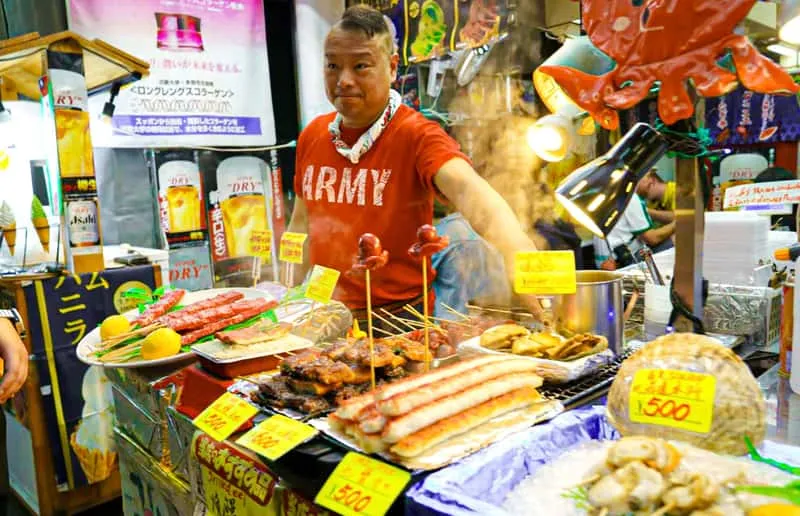
Top Rated 4.8★ Nishiki Market Food Tour & Gion Walk — 7 Tastings
A three-hour walking tour that pairs Gion's stone-paved streets with Nishiki Market, the centuries-old "Kitchen of Kyoto". Stop at Nishiki Tenmangu Shrine, then graze through 7 tastings among…
- 7 tastings of local delicacies inside Nishiki Market
- Walk Gion's machiya streets before diving into the market
- Nishiki Tenmangu Shrine and the market's Edo-period history
- Yuba, Kyoto vegetables and matcha — the ingredients behind Kyoto cuisine
 from $41
Same-Day Friendly 4.4★
from $41
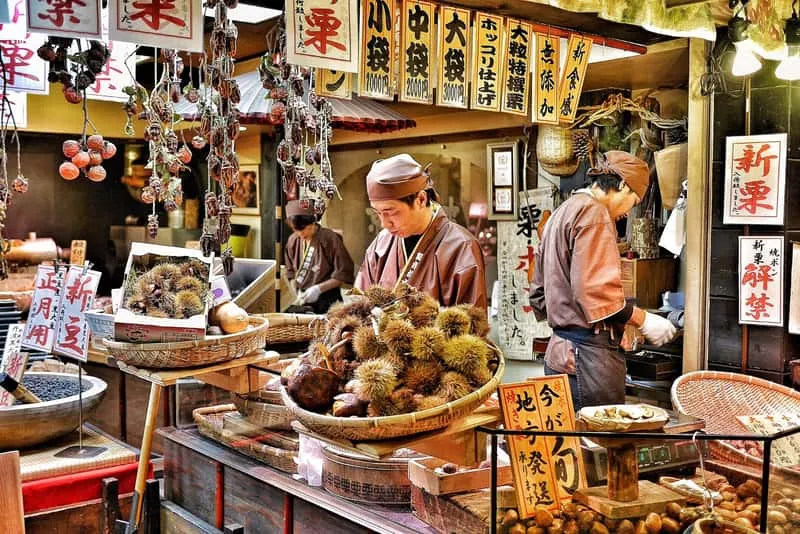
Same-Day Friendly 4.4★ Nishiki Market & Depachika Food Tour with a Local
A two-hour walking tour combining Nishiki Market with a depachika — the dazzling gourmet food hall in a department store basement. Multiple daily start times and same-day booking…
- Nishiki Market and a depachika food hall in one walk
- Depachika basement counters — wagashi sweets to gourmet deli
- Ends at Nishiki Tenmangu Shrine, the market's hidden gem
- Multiple start times with same-day booking available
 from $22
Unique Souvenir 4.9★
from $22
Unique Souvenir 4.9★ Replica Food Making Experience
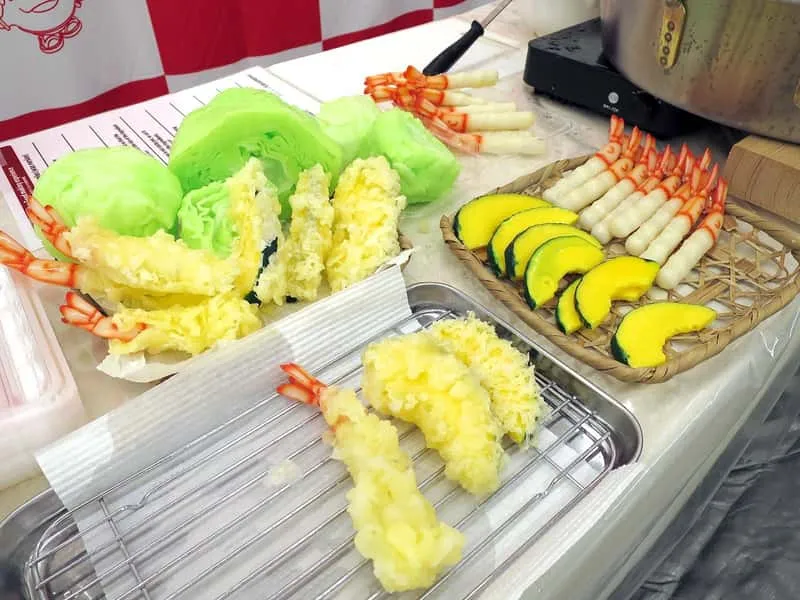
A one-hour hands-on workshop making Japan's famous replica food — the lifelike wax dishes displayed outside restaurants across the country. Shape shrimp and pumpkin tempura from melted wax…
- The only place in Kyoto to craft your own replica food
- Shape shrimp and pumpkin tempura from melted wax by hand
- Learn the story behind Japan's restaurant "sample" culture
- Take home your replica packaged like a supermarket item
The Honest Starting Point
Kyoto is one of the easier Japanese cities for vegetarian food, and the reason is historical rather than trendy: the city's dense concentration of Zen Buddhist temples needed a genuinely meat-free cuisine centuries before "plant-based" was a marketing phrase, and that cuisine, shojin ryori, is still cooked here today by kitchens that never stopped. That is real good news. It is not, however, the whole picture.
Outside the temple kitchens, most of Kyoto's everyday cooking, obanzai home-style dishes, market tastings, izakaya plates, was never built with a strict vegetarian in mind, and the one ingredient that decides whether an apparently plant-based dish actually is one is dashi, covered in full below. For the wider dish canon this diet question sits inside, see what to eat in Kyoto.
Dashi, the Ingredient That Decides the Answer
Dashi is Japan's foundational stock, and in its most common form it is made with katsuobushi, dried skipjack tuna shavings, or niboshi, dried sardines, sometimes both together. It is not a garnish or an occasional flavoring; it is the base liquid underneath a huge share of Japanese cooking, soups, simmered vegetable dishes, dressings, dipping sauces, and even sides that look entirely plant-based on the plate. This is exactly why the Japan National Tourism Organization explicitly warns travelers that a dish described as vegetarian may still have been cooked with fish stock.
A bowl of simmered kyo-yasai vegetables can be completely free of meat and fish as ingredients and still carry dashi as its cooking liquid, which makes it unsuitable for a strict vegetarian even though nothing on the plate looks like fish.
- Dashi shows up in soups, simmered dishes, dressings and sauces, not only in obviously fish-based dishes
- "No meat" and "no fish" are two different questions in Japan, and a kitchen needs both spelled out, not one assumed from the other
- The safest single question to ask a kitchen or a guide is about dashi by name, not about the dish's ingredients as listed on a menu
One more caution worth carrying alongside dashi: mirin and cooking sake, both alcohol-based, are in an enormous share of ordinary Japanese seasoning, which matters for anyone avoiding alcohol for religious or personal reasons, not only for vegetarians.
Shojin Ryori, the Reliable Plant-Based Meal
Why it works when so much else doesn't
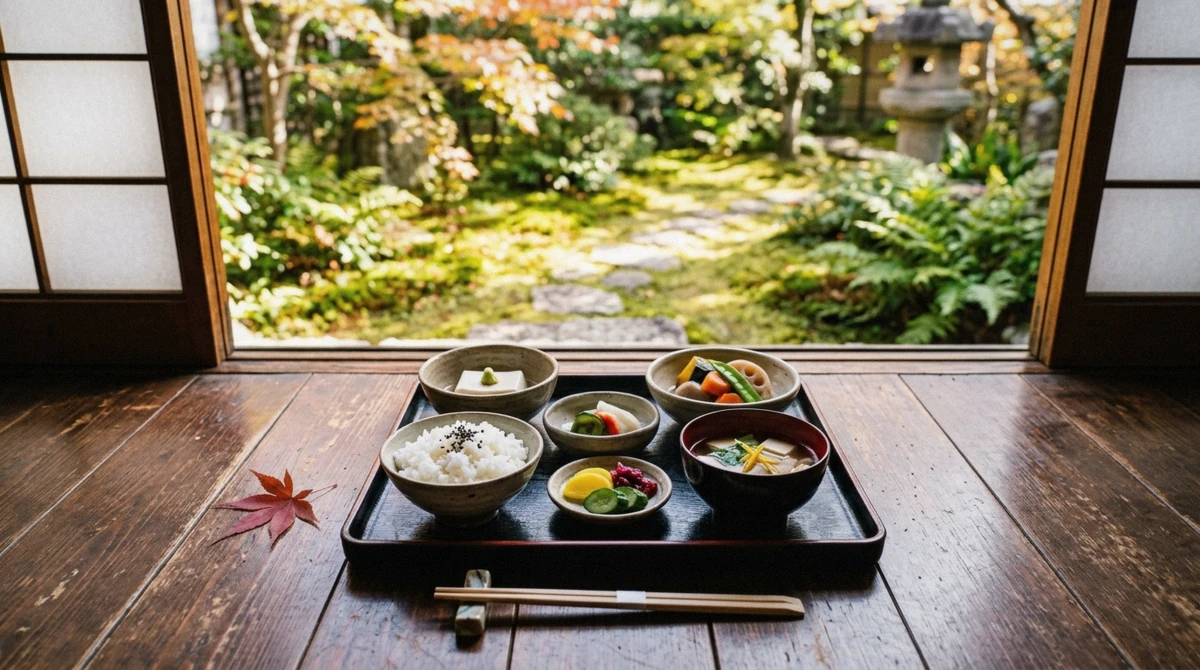
Shojin ryori is Buddhist temple cuisine, cooked without meat or fish and traditionally without onion or garlic either, and its dashi is made from kombu and dried shiitake mushrooms rather than dried fish. That single substitution is what makes it the genuinely reliable plant-based option in a city where so much other cooking quietly runs on fish stock; it is not a special vegetarian menu bolted onto a regular kitchen, it is a complete, centuries-old cuisine built without the ingredient that trips up everything else.
Shigetsu at Tenryu-ji, the specific option worth naming
Shigetsu sits inside the Sogen garden at Tenryu-ji temple in Arashiyama and serves shojin ryori at lunch only, 11:00 to 14:00, and it is closed on Thursdays. Reservations are required: the Yuki course needs at least two days' notice, and the Tsuki and Hana courses need at least three days' notice for parties of two or more. The restaurant is listed as a Bib Gourmand in the Michelin guide, and can be reached at 075-882-9725, open 09:00 to 17:00 for booking calls.
| Course | Price | What's included |
|---|---|---|
| Yuki | ¥3,800 (about $24) | rice, soup and five dishes |
| Tsuki | ¥6,500 (about $41) | six dishes |
| Hana | ¥9,000 (about $57) | seven dishes |
Every diner also pays a separate ¥500 (about $3) garden admission on top of the course price; it is not folded into the menu prices above. Converted at ¥159 to the dollar, the rate checked on 16 August 2026; the yen moves, so treat the dollar figures as a guide. Last verified: August 2026.
Vegetarian and Vegan Eating Away From the Temples
Away from a dedicated shojin ryori kitchen, Kyoto's vegetarian options get more case by case. Obanzai home-style dishes are genuinely vegetable-heavy, but the seasoning underneath them is very often dashi, so "looks vegetarian" and "is vegetarian" are not the same claim here. Nishiki Market's tofu and pickle specialists are a strong bet for a vegan-leaning grazing stop, since tsukemono and plain yuba are naturally free of animal ingredients, though even here it is worth asking rather than assuming, since some yuba preparations are simmered in a dashi-based sauce rather than served plain.
Vegan travelers should expect the strictest version of this problem: shojin ryori itself is traditionally vegetarian rather than certified vegan in every case, since some preparations use dairy-adjacent or honey-based touches at individual kitchens, so it is worth asking that specific question at Shigetsu or any temple restaurant rather than assuming vegan and vegetarian are interchangeable labels in Japan.
Halal in Kyoto, Realistically
Gion Naritaya, the named certified option
Gion Naritaya, in Higashiyama, is a halal ramen shop certified by the Japan Islamic Trust, serving no pork and no alcohol, with a prayer space and mats provided for guests. It sits at Ability Gion Building 1F, 424 Rinkacho, Higashiyama-ku, Kyoto 605-0062, with hours reported as 11:00 to 22:00, though Kyoto restaurant hours move and it is worth confirming before you travel there specifically. Last verified: August 2026.
The realistic citywide picture
Certified halal restaurants genuinely exist in Kyoto, but they are a small, specific set rather than something you will stumble into at random. Mirin and cooking sake are in an enormous share of ordinary Japanese seasoning, which rules out a large portion of standard izakaya and market cooking without a kitchen actively working around it. A guided tasting walk through izakaya counters and market stalls is not a halal itinerary and should not be treated as one; if halal certification matters to your trip, plan around named restaurants like Gion Naritaya rather than assuming a general food tour will cover you.
Allergies: What a Guide Can and Cannot Do
A good guide can ask a kitchen questions on your behalf, translate an allergy clearly, and steer you away from a dish they know contains a specific ingredient. What a guide cannot do is guarantee a kitchen's process. A tour that visits several independent eateries cannot guarantee an allergen-free meal at every one of them, because each stop is a separate kitchen with its own suppliers, its own cross-contact risk and its own staff, and a guide has no more control over any one of those kitchens than a translator has over a conversation's outcome.
If a restriction is severe, treat it as a conversation with the operator before you book and pay, not as something to hand a guide at the meeting point and hope for the best. Message the operator directly, name the exact restriction, and ask what they can realistically do before you commit.
Which Guided Tastings Can Adapt and Which Say No
The honest version, in the operators' own stated positions rather than a general reassurance:
| Tour | What it states about dietary needs | Note |
|---|---|---|
| The Nishiki Market food tour and Gion walk | Adapts to dietary needs with advance notice; the group is capped at nine | message the operator when you book, not on the day |
| The Gion evening food tour | Offers no gluten-free or vegan option | best skipped outright if either is a hard requirement |
| The Nishiki Market tour with a local foodie | States plainly that it cannot accommodate allergies or religious diets | not a fit for anyone with a dietary restriction, full stop |
The evening izakaya-format routes lean on fish, chicken and dashi by their nature, so even where a tour has no explicit statement on file, a vegetarian or halal traveler should treat any evening tasting route with the same caution as one that says nothing at all. Full pricing for every format is compared on our Kyoto food tour cost page if budget is part of the decision.
Before you book with a dietary requirement
A short checklist, in order:
- Message the operator before booking, not at the meeting point, and name the exact restriction: vegetarian, vegan, halal, or a specific allergy
- Ask specifically about dashi, not just whether a dish is "vegetarian", since a plant-looking dish can still carry fish stock
- If the restriction is religious or medical rather than a preference, ask directly whether the operator can guarantee anything; most tours through independent kitchens cannot
- For a severe allergy, treat it as a pre-booking conversation with the operator, not something the guide can solve on the day
- Keep a written note of the restriction in Japanese, using the phrase below, in case it needs to be relayed to a shop directly
Phrases to Carry
One sentence covers the most common vegetarian case, and the second clause is the one that actually changes the kitchen's answer: "Watashi wa bejitarian desu. Niku, sakana, dashi mo dame desu", meaning "I am vegetarian; no meat, no fish, and no dashi either." Leaving off the dashi clause is the single most common mistake travelers make when explaining a vegetarian diet in Japan, since "no meat, no fish" alone leaves the stock question unanswered. Writing the phrase down, rather than only saying it, is worth doing for a busy market stall or a kitchen where the person taking your order may not be the one cooking.
For the tour lineup this all applies to, see the full tour lineup.
Which Kyoto Meal Suits Your Requirement
If you are vegan and want one meal you do not have to interrogate
a shojin ryori lunch at a temple, where the stock is kombu and dried shiitake rather than fish
If you are vegetarian and flexible about dashi
most of the city opens up, including the market walks, though ask about each dish rather than each menu
If you eat halal
plan around certified restaurants and treat a tasting walk through izakaya and market stalls as something separate from your meals
If you have a severe allergy
a conversation with the operator before you book, and an honest willingness to walk away if the answer is vague
If you are travelling with one vegetarian in a group of omnivores
a market walk that states it adapts with advance notice, booked early enough for that notice to mean something
Frequently Asked Questions
Is Kyoto easy for vegetarians?
Easier than most Japanese cities, thanks to the shojin ryori temple-cuisine tradition, but not automatic. Ask specifically about dashi rather than assuming a dish labeled vegetarian is free of fish stock, and check a tour's stated position before booking, as the Nishiki Market food tour and Gion walk and the Nishiki Market tour with a local foodie sit at opposite ends of that answer.
What is dashi and why does it matter for vegetarians?
Dashi is Japan's base stock, usually made from dried skipjack tuna or dried sardines, and it is used in soups, simmered dishes, dressings and sauces across ordinary Japanese cooking. A dish can look entirely plant-based and still have been cooked in dashi, which is why the Japan National Tourism Organization warns travelers a "vegetarian" dish may still carry fish stock.
Where can you eat a reliably plant-based meal in Kyoto?
Shojin ryori is the most reliable option, since it is cooked with kombu and dried shiitake dashi rather than fish. Shigetsu at Tenryu-ji in Arashiyama is a named, bookable example, lunch only, 11:00 to 14:00, closed Thursdays, with courses from ¥3,800 (about $24).
Can you eat halal in Kyoto?
Yes, but the options are a small, specific set rather than the norm. Gion Naritaya in Higashiyama is certified halal by the Japan Islamic Trust, with no pork or alcohol and a prayer space provided. Mirin and cooking sake are in most ordinary Japanese seasoning, so a general food tour is not a halal itinerary.
Can a Kyoto food tour handle allergies?
It depends entirely on the operator, and none can guarantee an allergen-free meal across several independent kitchens. The Nishiki Market food tour and Gion walk adapts to dietary needs with advance notice and caps its group at nine; the Nishiki Market tour with a local foodie states plainly that it cannot accommodate allergies or religious diets at all.
How do you explain your dietary needs in Japanese?
"Watashi wa bejitarian desu. Niku, sakana, dashi mo dame desu" covers the vegetarian case, meaning no meat, no fish and no dashi either; the dashi clause is the one that actually changes a kitchen's answer, so do not leave it off.