What to Eat in Kyoto: A Local's Dish-by-Dish Guide
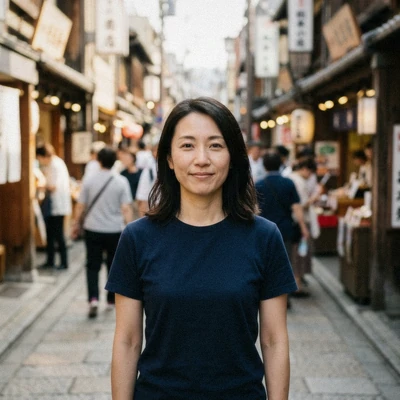
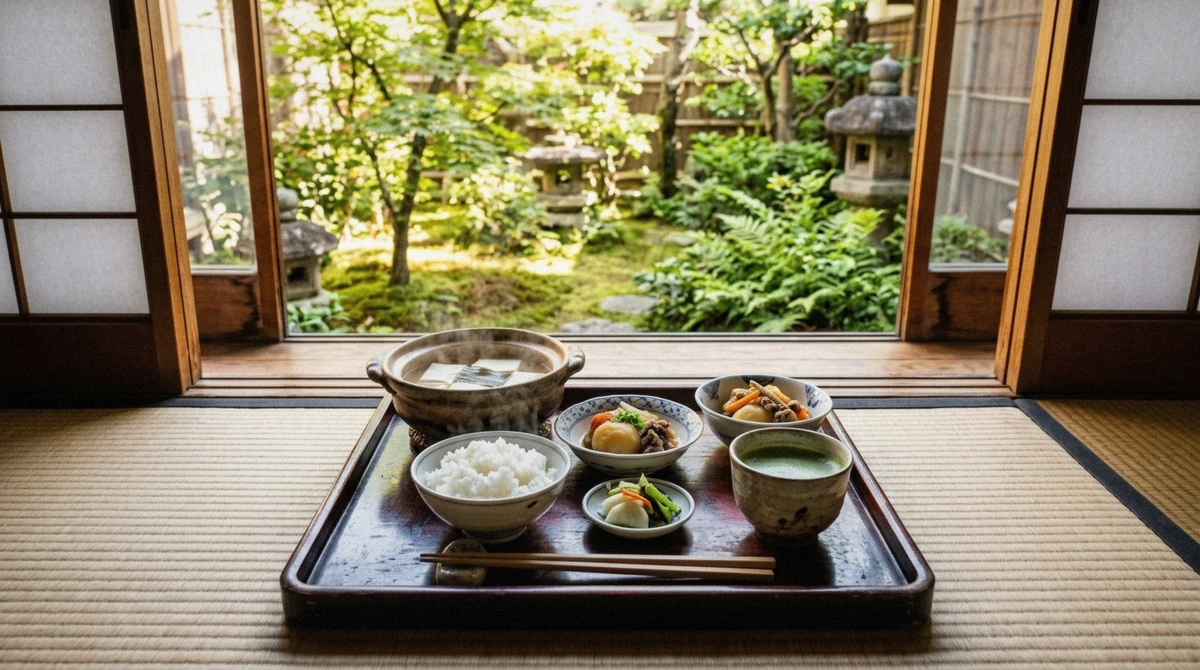
Kyoto has its own kitchen, and it is quieter than the rest of Japan's. Ask what to eat in Kyoto and a local will not start with ramen or sushi, both of which the city eats happily but did not invent; they will start with a bowl of simmered vegetables seasoned with dashi, a sheet of tofu skin lifted off a pot of soy milk, or a course of pickles that a family has been curing the same way for three generations. This guide sorts the dish list honestly: what genuinely grew up in Kyoto's temples, tea houses and home kitchens, what is a national dish you happen to eat well here too, and where each one actually turns up on the plate. The Kyoto tasting tours that cover these dishes put most of this list in front of you in one sitting, which is the fastest way to taste your way through it rather than reading about it.
Quick answer
What to eat in Kyoto starts with obanzai home cooking, yuba and yudofu tofu dishes, kaiseki's multi-course seasonal meal, and Uji matcha sweets, all genuinely local; ramen, takoyaki and sashimi are eaten here too but belong to Japan generally, not to Kyoto specifically. Most of the local canon turns up across an evening tasting route or a market walk rather than any single restaurant.
Key takeaways
- Obanzai, yuba, yudofu, kaiseki, tsukemono and Uji matcha are the dishes that are genuinely Kyoto's own
- Ramen, takoyaki, karaage, tempura and sashimi are eaten well here but are national dishes, not local inventions
- The Gion and Pontocho night tour serves up to thirteen of these dishes across one evening
- Yudofu is strictly a winter dish, at its best when the JMA's daily highs sit near 12 degrees Celsius
- Vegetarian and halal travelers should read the dashi caveat before assuming any of these dishes are automatically meat-free
- See the season table below for what is genuinely on the plate each month
Guided Tastings That Cover This Dish List
Each of these tours puts a working slice of the canon below in front of you in one sitting, from an evening izakaya route through Gion and Pontocho to a daytime graze through Nishiki Market.
 from $70
Gion Classic 4.8★
from $70
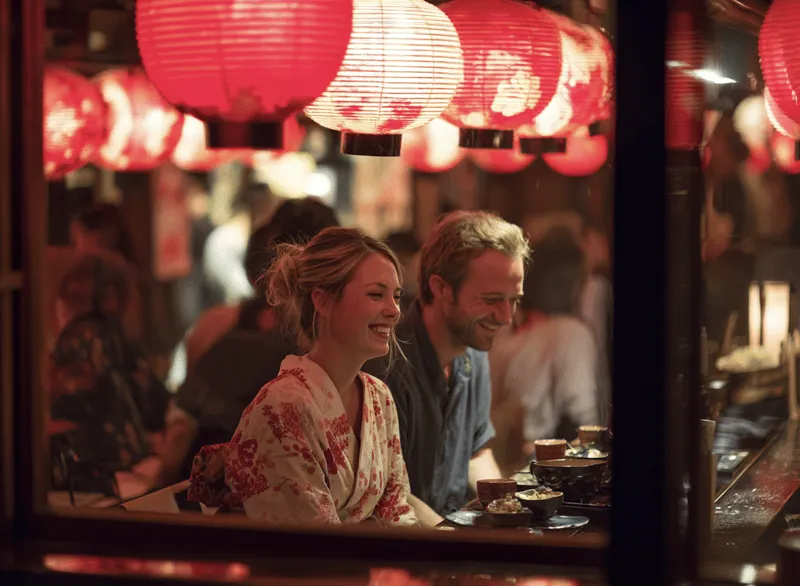
Gion Classic 4.8★ Gion Evening Food Tour — 13 Dishes at 4 Local Eateries
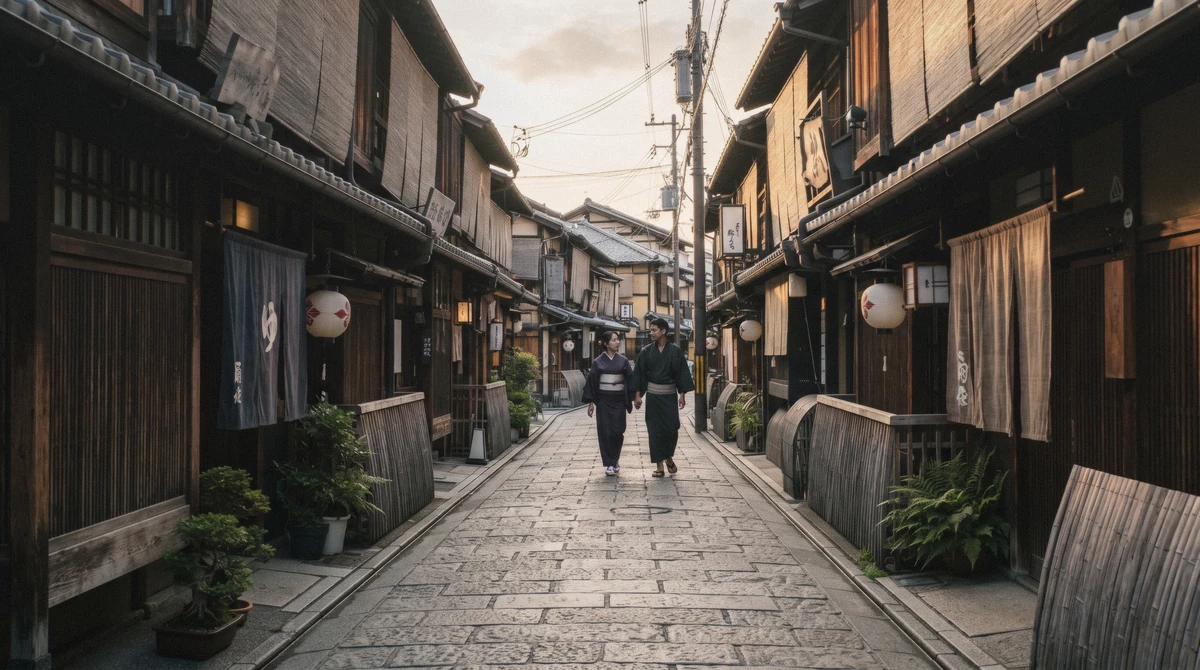
An immersive evening walk through Gion, Kyoto's most famous geisha district. Follow cobblestone lanes lined with wooden machiya houses and work through 13 dishes across 4 local eateries…
- 13 tastings across 4 eateries locals actually use
- Evening stroll through Gion's lantern-lit machiya lanes
- Geisha culture and history told street by street
- Mix of long-standing institutions and modern favorites off the tourist path
 from $70
Best Seller — 477 Reviews, 4.9★
from $70
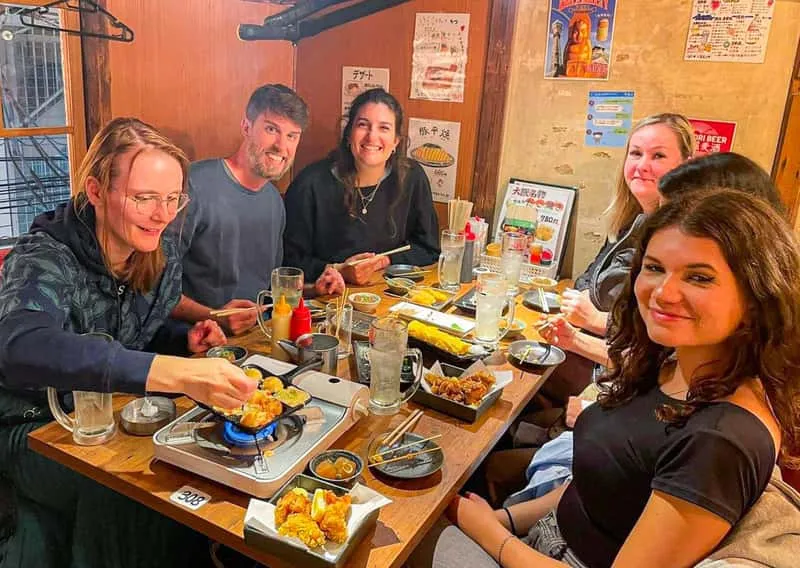
Best Seller — 477 Reviews, 4.9★ Gion & Pontocho Night Food Tour with 13 Dishes
A small-group evening tour through Gion and Pontocho with up to 13 dishes — karaage, tempura, sashimi — paired with Kyoto sake. Start at the illuminated Yasaka Shrine…
- Up to 13 dishes from izakaya plates to sashimi, with Kyoto sake
- Yasaka Shrine illuminated at night to open the evening
- Gion Shirakawa stroll past tea houses geishas still visit
- Finish in Pontocho Alley at a hidden local dining spot
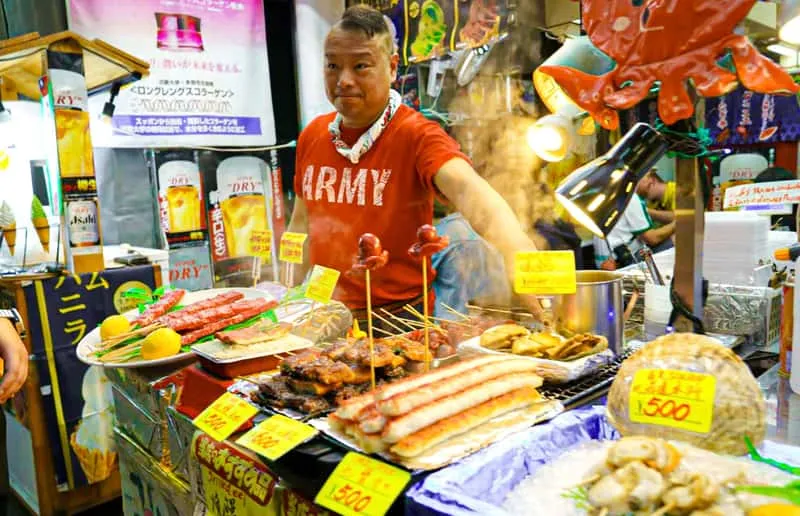 from $50
Top Rated 4.8★
from $50
Top Rated 4.8★ Nishiki Market Food Tour & Gion Walk — 7 Tastings
A three-hour walking tour that pairs Gion's stone-paved streets with Nishiki Market, the centuries-old "Kitchen of Kyoto". Stop at Nishiki Tenmangu Shrine, then graze through 7 tastings among…
- 7 tastings of local delicacies inside Nishiki Market
- Walk Gion's machiya streets before diving into the market
- Nishiki Tenmangu Shrine and the market's Edo-period history
- Yuba, Kyoto vegetables and matcha — the ingredients behind Kyoto cuisine
What Makes Kyoto Food Different
Kyoto sits inland, a good distance from open sea, and for most of its history that single fact shaped what ended up on the table. Fresh saltwater fish had to travel, so the city leaned instead on what it could grow, pickle, ferment or simmer close by: heirloom vegetables from the surrounding farmland, tofu made from soybeans and the soft water that runs off the hills, and dried fish carried inland along old trade routes rather than caught that morning. Add thirteen centuries as the imperial capital, a dense concentration of Zen Buddhist temples that needed a meat-free cuisine of their own, and a tea ceremony culture that prized restraint over spectacle, and you get a city whose food is generally quieter, more vegetable-forward and more seasonal than the more boisterous street food of Osaka or the fish-first sushi culture of Tokyo.
That is not a value judgment against ramen counters or fried chicken, both of which Kyoto eats plenty of. It is simply a different starting point: Kyoto's own dishes tend to build flavor through dashi and gentle seasoning rather than through frying, grilling over open flame or heavy sauce, and the city's most-repeated ingredients, tofu, seasonal vegetables and pickles, are exactly the things a temple kitchen or a home cook without easy access to the sea would reach for first.
The Dishes That Are Genuinely Kyoto
The Kyoto shortlist, in one table
This is the core list, the dishes a Kyoto native would actually name if you asked what the city eats that nowhere else quite does the same way. A few, shojin ryori chief among them, get a fuller treatment on our vegetarian and halal food in Kyoto page, since it is also the city's most reliable plant-based meal, with named courses running from 3,800 to 9,000 yen at a temple restaurant in Arashiyama; here it gets one line and a link.
| Dish | What it is | Where you meet it | Season |
|---|---|---|---|
| Obanzai | Kyoto's everyday home-style side dishes, seasonal vegetables seasoned with dashi | small kitchens and obanzai counters across the city | year-round, the vegetables change month to month |
| Yuba | the skin lifted off a pot of heated soy milk, served fresh, rolled or dried | temple-adjacent kitchens and specialist shops, including stalls inside Nishiki Market | year-round |
| Yudofu | tofu simmered in a light kombu broth and eaten with a dipping sauce | temple restaurants around Nanzen-ji and Arashiyama | a winter dish, strongly associated with the colder months |
| Kyo-yasai | Kyoto's heirloom vegetables, among them kamo nasu aubergine, shogoin turnip and kujo negi | greengrocers, obanzai kitchens and izakaya plates across the city | each vegetable has its own window, turnip in winter, aubergine in summer |
| Tsukemono | Kyoto's pickles, especially shibazuke, senmaizuke and suguki | pickle specialist shops inside Nishiki Market | year-round, suguki traditionally leans toward winter |
| Saba-zushi | pressed mackerel sushi, carried inland historically along the Saba Kaido, the old mackerel road from the Sea of Japan | sushi counters and market stalls citywide | year-round |
| Nishin soba | buckwheat noodles topped with sweet-simmered dried herring, a dish that originated in Kyoto | soba counters across the city | most associated with autumn and winter |
| Kaiseki ryori | the multi-course seasonal meal that grew out of the tea ceremony and the court kitchens | ryotei restaurants across the city | the courses themselves change with the season |
| Uji matcha and wagashi | Kyoto's tea, grown in Uji just south of the city, and the sweets tradition that grew alongside the tea ceremony | teahouses, market stalls, depachika food halls | year-round, wagashi shapes change with the month |
| Fushimi sake | rice sake brewed in Fushimi, one of Japan's major brewing districts, in southern Kyoto | izakaya counters and sake shops | year-round, new-season sake released in late winter |
How to read that list on a menu
Read that table as a starting map rather than a checklist to clear in one visit. A single evening tasting route will not put all ten in front of you, but between one evening tour and one daytime market walk, most travelers taste the majority of this list without hunting for any of it themselves.
Kaiseki, Obanzai and the Gap Between Them
Both dishes come from the same instinct, cooking with the season rather than against it, and both trace back to the same broad history, one that runs through Zen Buddhist temple cooking and the tea ceremony. From there they split in register rather than in philosophy. Kaiseki ryori is Kyoto's formal, multi-course meal, historically shaped by the etiquette of the tea ceremony and refined further in the kitchens that served the imperial court; a proper kaiseki dinner moves through a fixed sequence of small, precisely plated courses, each one keyed to the month it is served in, and it is booked as a sit-down restaurant meal rather than something you graze on a walking tour.
Obanzai is the same seasonal instinct at home volume. It is Kyoto's everyday cooking, the dishes a household actually eats on a Tuesday: simmered vegetables, a piece of grilled fish, a small dish of tofu, all seasoned with dashi and served as a spread of small bowls rather than a single plated course. Where kaiseki is theatre, obanzai is habit. A visitor is more likely to encounter obanzai on a guided tasting route or at a casual counter restaurant, and more likely to encounter kaiseki as its own reserved, sit-down evening. Knowing the difference saves a mismatched expectation either way, nobody wants to book a formal kaiseki dinner expecting a market-style graze, or wander into an obanzai counter expecting a twelve-course tasting menu.
Tofu in a City That Made It a Speciality
No other Japanese city has built quite so much of its reputation on soybeans. Kyoto's soft groundwater, drawn from the hills that ring the basin, is the usual explanation locals give for why the tofu made here tastes noticeably different, and two dishes built specifically around it carry the tradition.
- Yuba is the delicate skin that forms on the surface of heated soy milk, lifted off by hand in thin sheets and served fresh, rolled, or dried for later use. It began as a temple ingredient, prized by monks who could not eat meat, and it has since become one of the city's small luxuries, showing up folded into a simmered dish, draped over rice, or eaten on its own with a touch of soy sauce and wasabi.
- Yudofu is heartier and strictly seasonal: blocks of tofu simmered gently in a light kombu broth at the table, then lifted out and eaten with a dipping sauce. It is a winter dish through and through, and the restaurants built around it cluster near the temple districts of Nanzen-ji and Arashiyama, where the pairing of a quiet garden view and a pot of simmering tofu has been a cold-weather ritual for generations.
Both dishes reward finding a kitchen that has been making them for decades rather than a generic menu item; the texture difference between a fresh-lifted sheet of yuba and a mass-produced one is not subtle once you have tasted the real thing side by side.
Sweets, Matcha and the Tea Connection
Kyoto's sweet tooth runs on tea, and the tea runs on Uji. The town of Uji, a short distance south of central Kyoto, has grown the country's most celebrated matcha for centuries, and the wagashi confectionery tradition, small seasonal sweets shaped like autumn leaves, cherry blossoms or snow, developed alongside it as the natural companion to a bowl of whisked tea in the tea ceremony. A proper wagashi shop changes its shapes and flavors with the calendar rather than running a fixed menu, which is part of the point: the sweet is meant to say what month it is before you even taste it.
- Matcha shows up well beyond the tea bowl in Kyoto, in soft-serve, in warabi mochi dusted with roasted soybean flour, and folded into wagashi fillings
- Wagashi shapes rotate monthly, so the same shop's counter looks different in April than it does in November
- Fushimi, in southern Kyoto, brews the sake that pairs with the savory side of the city's food, its soft water credited as the reason for the region's notably smooth style
- Tea shops that have sold leaves for a century still exist inside and around Nishiki Market, and are worth a stop even for a quick cup rather than a full tea ceremony
The National Dishes You Will Still Eat Here
Honesty matters here, since plenty of what visitors eat in Kyoto is genuinely excellent but not actually Kyoto's own invention. Ramen is the biggest example: Kyoto has developed its own heavier, thicker-broth reputation within the national dish, concentrated around Kyoto Station and the Ichijoji strip near the university, and it is worth seeking out on its own terms, just not as a claim on local originality. Takoyaki, karaage and tempura are the same story, national dishes done well here, served at street stalls and izakaya counters across the evening tasting routes, alongside sashimi and dashimaki tamago, the rolled omelette cooked with dashi that shows up on nearly every izakaya table in the country, Kyoto included.
None of this is a complaint. A three-hour evening tour through Gion and Pontocho will happily serve you a plate of karaage next to a bowl of obanzai, and both deserve to be eaten; the honest version of "what to eat in Kyoto" simply keeps the two lists separate rather than crediting the city with dishes that belong to the whole country.
What Is on the Plate by Season
Kyoto's basin geography gives it a real seasonal swing, hot and humid summers and cold, still winters, and the kitchen follows the thermometer closely. The Japan Meteorological Agency's 1991-2020 normals for Kyoto give a useful frame for what that swing actually feels like against what shows up on the plate.
| Season | Kyoto's JMA daily high (representative month) | What's genuinely on the plate |
|---|---|---|
| Spring | 20.1 °C / 68 °F (April) | sakura-shaped wagashi, the first tender kyo-yasai of the year, lighter obanzai plates |
| Summer | 32.0 °C / 90 °F (July) | cold soba, chilled tofu, hamo eel in the height of summer, matcha shaved ice against the heat |
| Autumn | 23.4 °C / 74 °F (October) | matsutake mushroom dishes, the first pressings of new-season sake, richer kaiseki courses |
| Winter | 11.6 °C / 53 °F (December) | yudofu at its seasonal peak, nishin soba, the deepest obanzai stews of the year |
Read the table as a rough compass rather than a rule: a good obanzai kitchen will still simmer a winter-leaning dish on a cool spring evening, and Nishiki Market's covered arcade sells pickles and tofu skin whatever the weather is doing outside. But if you are choosing between an August visit and a January one specifically to eat well, expect hamo eel and cold noodles in the first case and yudofu and nishin soba in the second, and plan accordingly. Last verified: August 2026.
Where Each Dish Turns Up on a Guided Tasting
On the evening tasting routes
The Gion evening food tour and the Gion and Pontocho night tour both work through a progressive series of izakaya-style stops, up to thirteen dishes across a single evening, and this is where obanzai-style small plates, sashimi, tempura and Fushimi sake mostly appear together, alongside a genuine local dish or two depending on the night's kitchens. It is the fastest way to taste a wide cross-section of the list above without booking several separate meals.
On the daytime market walk
Nishiki Market Food Tour & Gion Walk style routes graze through Nishiki Market itself, where tsukemono specialists, fresh yuba stalls and century-old tea shops trade side by side; the market's own history and rules get a full page of their own at our Nishiki Market guide, so this page keeps to one line: it is the single best concentrated stop for tsukemono, yuba and matcha sweets on foot.
Whichever food tours across Kyoto you end up comparing, the honest way to choose is by dish list rather than by price alone: an evening route buys you the local izakaya spread and a full dinner, a market walk buys you the pickle and tofu-skin side of the canon in generous, standing-up bites.
Which Dish Should You Chase First
If You want the fastest introduction to Kyoto's home cooking
start with an evening tasting route, the Gion evening food tour or the Gion and Pontocho night tour, both built around a progressive spread of small plates and local sake
If You care most about tofu and yuba
look for a walk that stops inside Nishiki Market, where the pickle and tofu-skin specialists trade; the full picture of the market itself is in our Nishiki Market guide
If You are vegetarian, vegan or keeping halal
read vegetarian and halal food in Kyoto before choosing a tour; dashi changes the honest answer for almost every dish on this page
If You want a full seated meal rather than a walking tasting
kaiseki and shojin ryori are sit-down formats a walking tour cannot replicate; book a restaurant directly for either
A Short Eating List for a Kyoto Trip
If you only get a few meals here
Kyoto rewards a plan more than most Japanese cities, because so much of what is worth eating is seasonal, lunch-only, or behind a noren curtain with no English anywhere. This is the order we would work through it on a short trip.
- One obanzai spread, ideally at lunch, to learn what Kyoto home cooking tastes like before anything fancier.
- Yuba in at least one form, fresh or rolled. It is the ingredient this city turned into a luxury.
- Yudofu if you are here between December and February, when a pot of tofu in kombu broth stops being a curiosity.
- One properly brewed matcha at a tea shop rather than a soft-serve machine, with a wagashi alongside it.
- Saba-zushi, the pressed mackerel sushi that came inland along the old mackerel road.
- One arcade graze at Nishiki, stall by stall, eaten where you bought it. The Nishiki Market guide has the route.
- One thing that is not Kyoto at all. The ramen around Kyoto Station and the Ichijoji strip is good and nobody is grading you.
Frequently Asked Questions
What is the difference between kaiseki and obanzai?
Kaiseki is Kyoto's formal, multi-course seasonal meal, shaped by tea ceremony etiquette and served as a reserved sit-down dinner. Obanzai is the same seasonal cooking at home volume, everyday side dishes seasoned with dashi and served as a spread of small bowls. Both grew from the same instinct; they differ in register, not philosophy.
What is yuba and where do you eat it?
Yuba is the skin lifted off a pot of heated soy milk, served fresh, rolled or dried. It began as a temple ingredient and is now one of Kyoto's small luxuries, found at specialist shops and stalls inside Nishiki Market and on the market food tour.
Is Kyoto good for ramen and street food?
Yes, though it is worth knowing ramen is a national dish rather than a Kyoto invention. The city has its own heavier, thicker-broth reputation, concentrated around Kyoto Station and the Ichijoji strip, and street-stall staples like takoyaki and karaage turn up readily on the evening tasting routes.
What should you eat in Kyoto in each season?
Summer leans toward cold soba, chilled tofu and hamo eel; winter toward yudofu and nishin soba; spring brings sakura-shaped wagashi and the first tender kyo-yasai; autumn brings matsutake mushroom dishes and new-season sake. The season table above lines these up against the Japan Meteorological Agency's own Kyoto normals.
Which Kyoto dishes can you try on a guided tasting?
An evening route such as the Gion and Pontocho night tour covers up to thirteen dishes across a single evening, mostly obanzai-style plates, sashimi and Fushimi sake. A market walk such as the Nishiki Market Food Tour & Gion Walk leans toward tsukemono, fresh yuba and matcha sweets instead.
What is nishin soba?
Buckwheat noodles topped with sweet-simmered dried herring, a dish that originated in Kyoto rather than being adapted from elsewhere. It is most associated with the colder months and turns up at soba counters across the city.